
Who gets to be human?
Professor Jason Arday, and the Grace and Humanity we refuse each other
Written by Lena Bheeroo and Charity So White committee
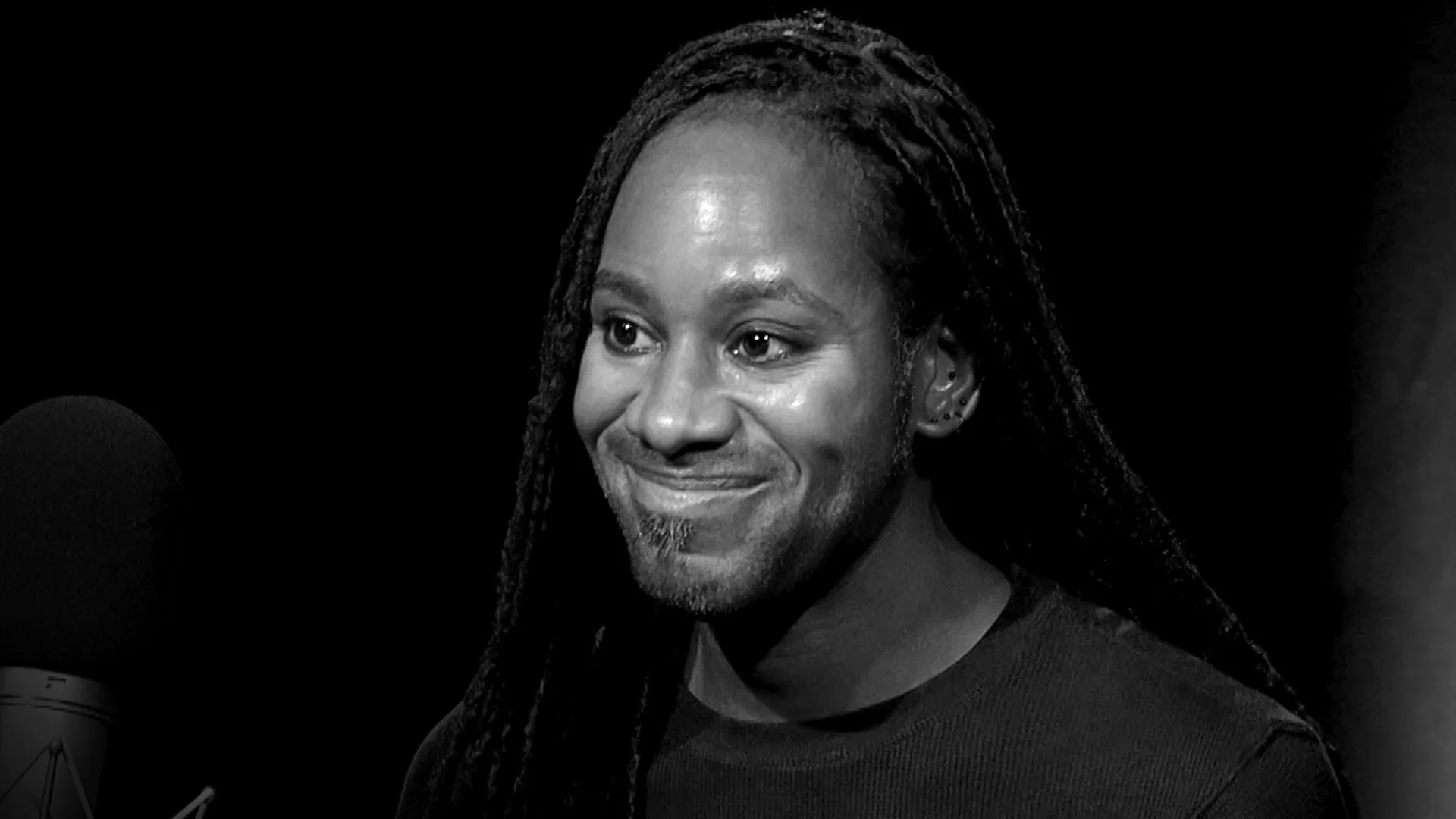
Professor Jason Arday was found dead on 14 August ‘26 after a months long media campaign against him. Photo credit: Channel 4
Let's begin with the man, not the story. This story has already had more of him than it deserved.
Jason Arday was a father, a partner, a brother, an uncle, a son. Cambridge University's youngest ever Black professor. He built a career from a starting point most institutions would have quietly written off. In his resignation letter he named a toll that was, in his words, more than any human could reasonably be expected to carry. Days later he was dead. His family has called it a campaign of sustained abuse, waged for years. Most people believed them long before his death made that belief unbearable to hold.
There is a great deal of anger about what happened to him. Good. But anger that stops at outrage misses the harder question underneath it. Who gets to be human? Who is permitted their mistakes? Who is required to be flawless before they are allowed to exist in public at all?
When institutions benefit from Black brilliance
Institutional cowardice is nowhere clearer than in the charity sector. The sector upholds the non-profit industrial complex, the incentive structure that rewards charities for managing injustice rather than ending it. Jason provided dedicated support, leadership, love and goodwill to many charities. These organisations were glad to benefit from his name, his labour and his credibility when it glistened in their funding bids, on their boards and diversity narratives. Yet in the middle of the media storm, those same charities did not do enough to advocate for him or defend him. They did not issue clear and supportive public statements. They did not stand beside him. Too many treated him as a reputational risk rather than a partner. That is the non-profit industrial complex in action: extract symbolic value from Black brilliance when you can, but never risk the donor pipeline. Charity becomes another institution that polices rather than protects. It takes from Black scholars when the time is right, and stays silent when they are hunted.
This is not one man's fall. It is part of a wider pattern of dehumanisation. From Stephen Lawrence to Chris Kaba to Child Q, British institutions have repeatedly shown how differently Black lives can be treated. The question is whether Black people are afforded the same presumption of humanity, complexity and care as everyone else.
Racism does not stay outside the body. It lives there, in disrupted sleep and a nervous system permanently braced, carrying more than any person should have to. Racism works through distraction. It keeps a person explaining their right to be in the room instead of doing the work that brought them there, as Toni Morrison conceptualised. Every forensic audit of Jason Arday's honorary titles did exactly that, while his scholarship and his mentorship of students vanished from view.
We all know that none of this happened without the press. Weeks of front pages, each stacking a fresh allegation on the last before it had been tested, is not neutral coverage. It is a choice. Editors decided a man's unravelling was worth more column inches than his scholarship ever was. We live in a world where dehumanising Black people has become a kind of sport, an entire life's story and journey erased in a headline, a thread, a verdict passed before anyone has read the whole of it. Who was that coverage actually serving? Once he was no longer here, the tone changed overnight, suddenly careful, suddenly finding other stories, suddenly walking back words already in print. That timing is not an accident.
There is no post-racial society, only the comfortable lie that there is. White supremacy is structural, not incidental, built into every layer of British institutions, and no amount of success, status or recognition buys a way out of it, or can ultimately protect you from it.
Jason Arday reached one of the highest positions his profession offers. It did not protect him.
White men in British public life lie to Parliament and resign in disgrace, then reappear rehabilitated within a news cycle or two, and a cushy new job. Nobody says their failures implicate every white man in office. Just 1% of UK professors are Black, and one man's fall is being treated as proof an entire community cannot be trusted. The same thing happened at Euro 2020, when Saka, Rashford and Sancho missed penalties and faced racist abuse within minutes, for making a mistake - something even the best players do and seek comfort for. So ask the real question - if faltering in public brings this kind of punishment for Black people and people of colour, and this kind of grace for everyone else, why would any of us choose visibility or power at all?
Solidarity cannot be conditional
Jason Arday faced institutions that have never had to change because Black people and people of colour absorb the cost of resisting them. That arrangement lets an institution wait out one story at a time and never face the pattern. The pattern is this: Black and brown people do the work to create a better working environment for racialised people, then get rolled out as proof the organisation is not racist the moment it is accused. They end up burned out from the emotional labour, then spat out when restructures arrive to dilute and defang our movements.
The right defends its own past against all evidence, because to them an attack on one is an attack on all. This is not a call for that same reflex. It is asking why our racially minoritised community so rarely extends even the ordinary grace of waiting for the facts. When our activism demands solidarity with people scapegoated in our movements, we are quick to abandon them.
That hesitation was not an accident. The right built it through open hostility. The liberal establishment built it through a respectability politics that punishes proximity to anyone deemed controversial. If defending you threatens their invitation to whiteness, the liberal establishment is more than happy to throw you under a bus or two. When self-preservation matters more than life or death situations for our people, we should be ashamed.
Different tools, same result. A community too fractured to move as one, even when the case for moving together is this clear.
The anger of this past week is real, and it is righteous. But anger that mobilises for a moment is not power. Power is a community organised to hold institutions to account once the moment passes, built through relationships with people not yet convinced, not assembled from grief after the fact. That collective voice has been too quiet for too long.
There is no tidy answer to what solidarity should have looked like this month. Only that Jason Arday deserved the ordinary human right to be flawed without that becoming fatal. He deserved the same space to be human that is handed, without a second thought, to men and women who look nothing like him and have done far worse.
His family deserve care, love, privacy and peace.
The institutions that failed Jason Arday owe an honest reckoning. Not a delayed statement. Not a careful, lawyer-approved apology. A reckoning.
We have waited long enough. It should not take the lynching of another Black life, another string of deleted articles and tweets, another slow humiliation for this country to reflect, apologise, and pretend to turn the page.
The page does not turn on its own. It is turned by those who hold power, and all too often it is turned over us.